

Do you remember when COVID-19 made stadiums empty? Bookmakers faced a similar challenge, but instead of a magical force, it was a pandemic. It canceled every game.
This crisis led to a new solution. AI-powered simulations became the industry’s backup plan. When games stopped, these simulations took over.
OddsMatrix was at the forefront of this change. Their engines predicted outcomes with amazing accuracy. Soon, research proved what experts already knew. Machine learning was more than just a temporary fix.
It was a game-changer for sports betting risk management. Imagine Moneyball meets The Matrix, but with more stats. These simulation models went from being new ideas to essential tools in sportsbooks.
Tools and Platforms
Simulation modeling is like an art form, with today’s platforms being the tools of the trade. We’re not just creating pretty pictures. We’re making complex probability distributions that could surprise even the experts on Wall Street.
OddsMatrix’s AI engines are the stars of this digital world. They don’t just simulate events; they bring them to life. The accuracy is so high, it feels like they have a crystal ball.

What makes these platforms special? They use adaptive behavior models that learn and grow. They understand patterns and adjust strategies on the fly. It’s like going from a simple abacus to NASA’s Mars mission control.
The magic lies in how these systems connect. They integrate with existing systems seamlessly. Whether you’re using established platforms or creating your own, the options are vast.
But these engines need quality data to work their magic. They use data from BetExplorer, OddsPortal, and more. It’s like having a treasure trove of information at your fingertips.
These tools turn data into useful insights. They show you not just what might happen, but why and how to prepare. This is the power of modern simulation technology in risk strategy.
Think of it as having a crystal ball that explains its predictions. These platforms give you the tools to create your masterpiece. Your risk strategy becomes proactive, predictive, and adaptable.
How to Model Game Scenarios
Ever wonder why some bettors seem to have a crystal ball while others lose? It’s not magic – it’s math. Building good betting systems means using stats, not just guesses.
Think about it: would you trust a bridge made by someone who guessed about physics? No way. So, why bet on guesses?
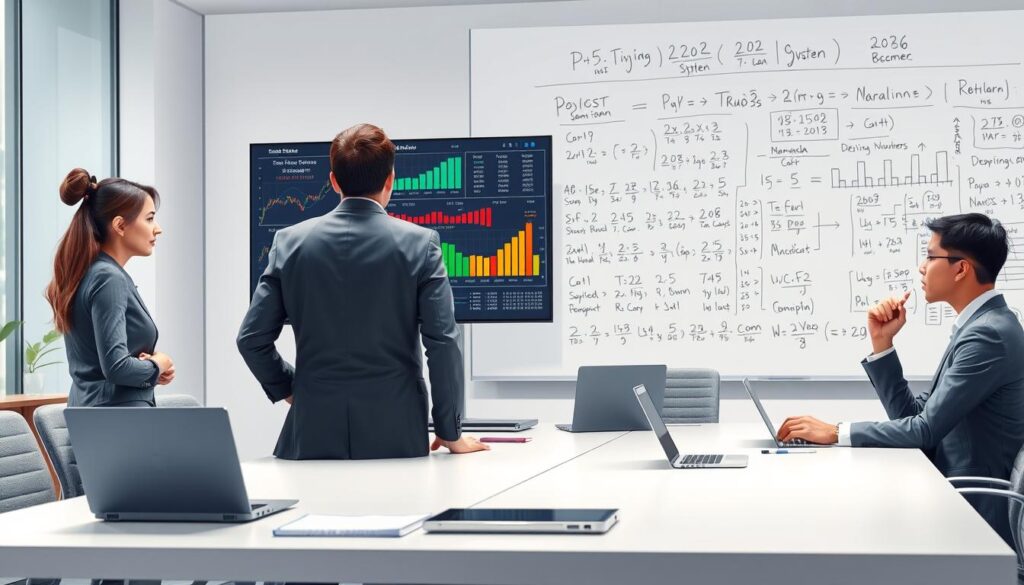
It starts with simple rules. These are like “if-then” statements. For example, bet against a home team if they haven’t won three games in a row. Or, bet on the over if both teams score over 100 points per game.
But many bettors fail here. They don’t test their ideas. Backtesting is like a time machine for your strategies. It lets you see how your rules would have done in past games.
Here’s how to validate your strategy:
- Collect data on past games
- Apply your rules to that data
- See how much you would have made
- Check if your results are real or just luck
The magic happens with p-values. A p-value under 0.05 means your wins are likely skill, not luck. That’s the key to being a real strategist, not just lucky.
Advanced bettors use machine learning. These systems look at many factors at once. They’re like supercomputers that find patterns we can’t see.
Remember, good modeling needs different methods. The three methods in simulation modeling are key for strong systems.
The best betting systems use rules, stats, and machine learning. This mix makes the difference between pros and amateurs.
The goal isn’t a perfect system. That doesn’t exist. It’s to make strategies that beat chance most of the time. Because, in the end, chance always balances out. You might not win every time, but with smart modeling, you can make the house work for you.
Translating Results to Real Strategies
So your simulation models give you beautiful numbers. Congratulations! Now, you have to turn those numbers into real money without losing too much. This is where theory meets reality, and many strategies fail.
Different players need different strategies. Casual gamers want quick wins and simple rules. Serious analysts play complex games with numbers. Your strategy must fit these different needs.
Forward-testing is key. It’s where your model faces real events. Think of it like taking a race car from the wind tunnel to Daytona. Many models don’t last long in real races.
Blind betting is a big test. You guess probabilities without looking at odds. It shows your model’s true power.
The magic happens when you tailor strategies for your audience:
- Casual gamers need simple, satisfying plays with quick feedback
- New bettors need educational frameworks that build confidence slowly
- Hardcore fans want complex models and statistical edges to obsess over
All simulation models face variance, which can be cruel. The key is to build strong strategies that can handle bad runs. Proper bankroll management is key to staying in the game.
Successful implementation means always improving. Compare your real performance with simulation models predictions. Adjust for factors your model might have missed. The market changes, and so must your strategy.
Research shows humans often underestimate risks. Your simulation models might show this mathematically, but acting on it requires courage most players lack.
The gap between theory and practice is where fortunes are made or lost. Your simulation models give you a map, but you must navigate the territory. The best strategies mix math with psychology.
Profitability comes from using your simulation models edges while managing emotions. It’s not about winning every time. It’s about winning more often than expected and surviving losses.
Simulation Case Studies
Ever wonder if simulation models actually work outside a lab? OddsMatrix’s Simulated Reality Leagues showed us during lockdowns. They offered virtual football, cricket, and tennis matches that kept fans engaged. It was like sports never left—just digitized and risk-free.
Academic research goes further. Machine learning models have predicted tennis outcomes and beaten basketball spreads. But sometimes they crash harder than the 2008 housing market. Those failures teach more than any success could.
A solid risk strategy turns data into wins. It separates the pros from the amateurs in sports betting. Real-world case studies prove simulation isn’t just theory—it’s practice with punch.