

Oddsmakers release betting lines early in the week. By the time kickoff arrives, those numbers often look completely different. Casual sports fans stare at the board on a Sunday morning and wonder why their favorite team’s point spread moved three points since Tuesday. The answer comes down to risk management. Odds movement is caused by sportsbooks in order to balance their liability, respond to new information, and protect their profit margins. Knowing what triggers these line movements helps you place your bets at the exact right moment. For bettors looking for the best early numbers, tracking prices across different operators is standard practice. Reviewing online betting sites ranked gives you a clear picture of which platforms adjust their odds the fastest.
The Influence of Public Betting Volume
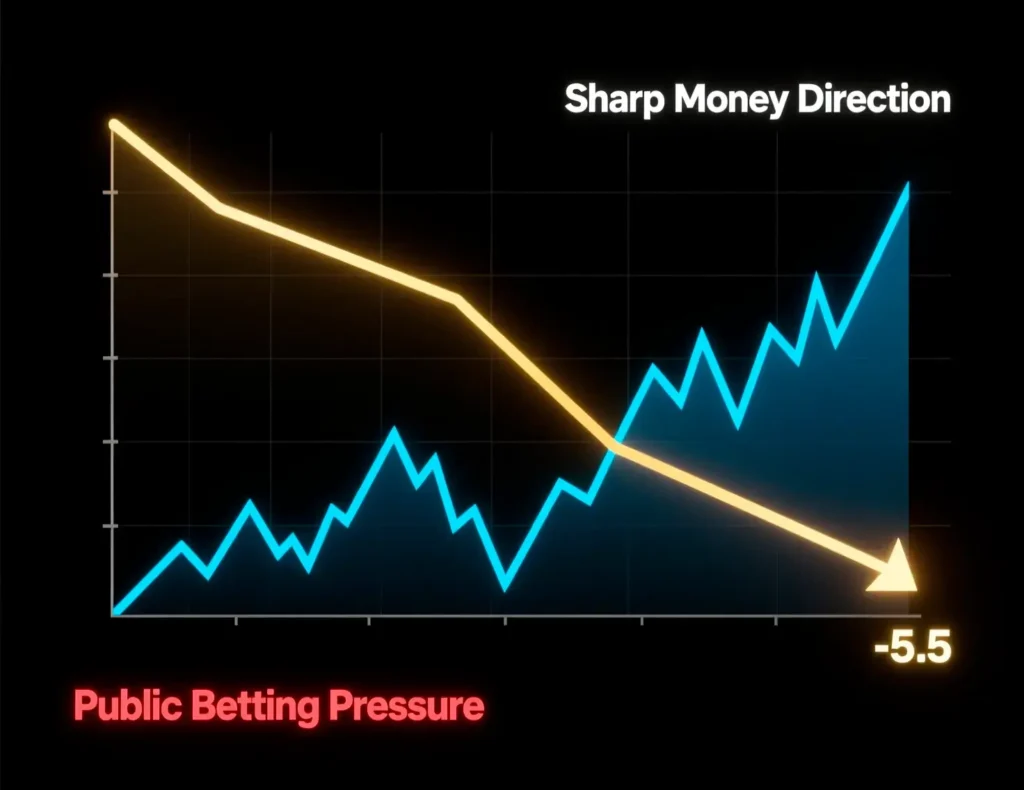
When a betting line opens, the general public typically attacks the favorites, the star players, and the over totals. Sportsbooks track the sheer volume of these incoming wagers. If heavy money floods in on a single team, the bookmaker faces a massive financial liability if that team wins. To balance their risk, oddsmakers shift the line. They make the popular team more expensive to bet on and improve the payout for the underdog.
This constant push and pull creates a fluid market. If a point spread opens at -3 and the public hammers the favorite, the sportsbook moves the line to -3.5 or -4. This adjustment makes the underdog more attractive, hoping to draw money to the other side of the ledger. Knowing what the 1X2 market means helps you see how this volume affects moneyline payouts in global soccer matches just as heavily as American football point spreads.
Respecting Sharp Money and Syndicate Action
Public volume moves lines slowly. Professional bettors move lines instantly. Sportsbooks respect a small group of highly successful, professional sports bettors, often called sharps. These bettors do not wager based on emotion or team loyalty. They use advanced mathematical models to find pricing errors.
When a sharp betting syndicate places a maximum limit wager on an underdog, the sportsbook takes notice immediately. The bookmaker trusts the sharp bettor’s mathematical model more than their own opening number. A single massive bet from a respected professional will shift a line faster than one thousand separate fifty-dollar bets from casual fans. Tracking this sharp action requires comparing odds across various platforms. Many bettors use real-time line tracking tools from sports data providers to spot where the professional money is landing before the weekend games begin.
Injury Reports and Roster Availability
Nothing impacts a point spread faster than an injury to a star quarterback or a starting pitcher. Oddsmakers build their opening numbers assuming the standard starting roster will play. As the week progresses, practice reports and press conferences reveal the true health of the players.
If a star player misses a Thursday practice, the sportsbook will shift the odds to account for his potential absence. If the team officially rules him out on Friday, the line moves violently again. Beyond the star players, sharp bettors track the offensive line and secondary defensive injuries. A team missing two starting offensive guards will struggle to run the ball, forcing the bookmaker to lower the overall game total.
Weather Conditions and External Factors
Outdoor sports rely heavily on weather forecasts. A line posted on a Monday cannot perfectly predict a Sunday rainstorm. As the week progresses and meteorologists update their models, sportsbooks adjust the odds to match the incoming weather reality.
High winds kill passing attacks and field goal attempts in football. Extreme summer heat allows baseballs to travel further, increasing run production. When the forecast calls for heavy winds during a football game, you will see the Over/Under total plummet as the week goes on. Bettors who monitor early weather reports can grab a high total before the oddsmaker slashes the number. Checking dedicated sports weather resources like Rotogrinders allows you to beat the oddsmaker’s adjustments and lock in a mathematically superior wager.
The Importance of Key Numbers in Betting
Bookmakers do not shift odds arbitrarily. They pay close attention to key numbers, especially in American football. Games frequently end with margins of victory of exactly three or seven points. These specific figures act as psychological and mathematical barriers for oddsmakers.
If a bookmaker opens a line at -2.5, they know moving it to -3 invites massive liability. A shift from -2.5 to -3 is exponentially more significant than a shift from -4.5 to -5. Oddsmakers fight hard to avoid moving off a key number. They only adjust it if sharp action forces their hand. Recognizing these critical thresholds allows you to predict when a line will freeze and when it will jump.
Timing Your Bets for Maximum Profit
Knowing why odds move is only half the battle. You must apply this knowledge to time your wagers perfectly. Casual bettors often wait until an hour before kickoff to place their bets. By that point, the market has already digested all available information. The opening value is gone.
Professional bettors strike early. They identify pricing mistakes on Monday morning before the public money arrives. If they miss the early numbers, they wait for the public to overreact to injury news on Friday and bet against the public sentiment. Controlling the timing of your wagers turns average bettors into profitable ones.
Quick Reference Table
| Movement Trigger | Primary Cause | Market Impact |
| Public Money | High volume of small wagers on a favorite | Gradual line shift toward the underdog |
| Sharp Action | Large wagers from professional syndicates | Sudden, violent line movement |
| Injury News | Status changes for key starting players | Direct adjustment to the spread and total |
| Weather Shifts | Wind, rain, or extreme heat forecasts | Heavy movement on the Over/Under totals |