
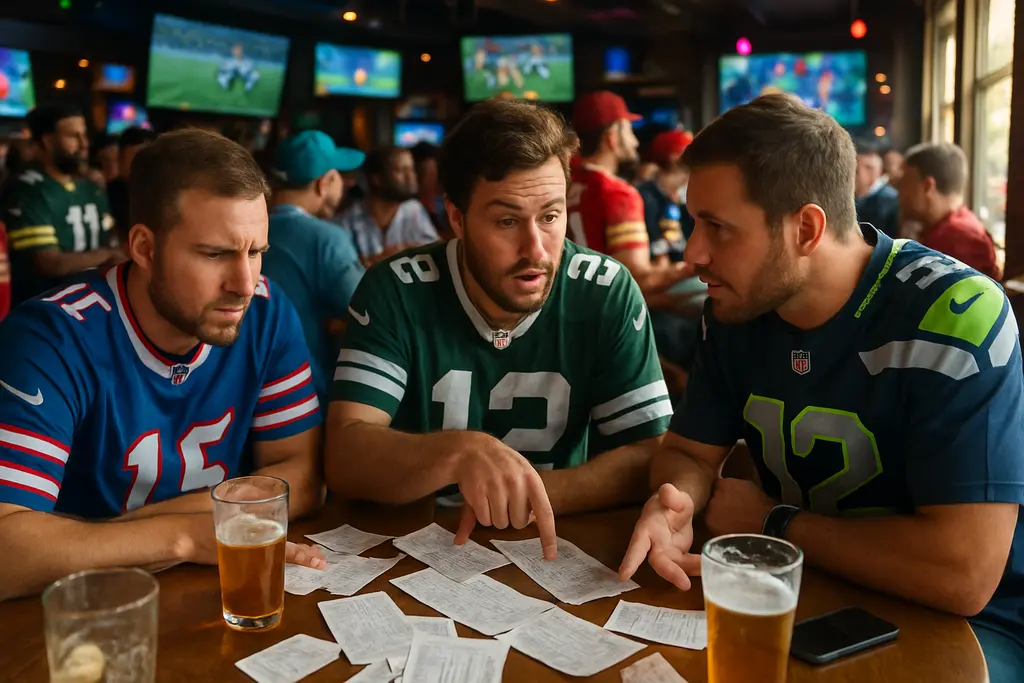
NFL betting strategy has shifted from a growth-first discussion to a risk-control discussion after the American Gaming Association projected $29.5 billion in legal NFL wagering for the 2026 season. The key issue is not that regulated sportsbook demand has disappeared. It is that the projected handle is almost flat against the 2025 estimate of $29.4 billion, while prediction markets are drawing attention from operators, leagues, states, and courts. The AGA attributed its 2026 estimate to legal NFL wagering and warned that sports event contracts are affecting the regulated channel AGA handle estimate.
That is a material signal for operators and bettors comparing market access. A flat regulated handle forecast does not mean every sportsbook, state, or NFL week will behave the same way. It does suggest that product depth, pricing discipline, retention economics, compliance, and customer trust may matter more than broad expansion claims. Because this analysis is about market structure rather than a specific NFL game, it does not quote sportsbook odds. Any operator-attributed odds posted before a matchup can move before kickoff, especially around injury news, limits, weather, and liquidity changes.
NFL Betting Strategy After Flat Handle
The AGA’s $29.5 billion projection creates a useful baseline for evaluating regulated NFL wagering in 2026. A move from $29.4 billion to $29.5 billion is not a collapse, but it is a pause after years in which legal access, mobile adoption, and promotional intensity helped push handle higher. From a strategic seat, flat growth forces tougher questions: where is handle moving, which customers remain profitable, and how much cost should an operator carry to retain them?
NFL Betting Strategy Risk Signals
The first risk signal is channel substitution. The research provided for this article identifies prediction markets as a major pressure point, with event contracts offering NFL outcome exposure outside traditional state sportsbook systems. If a customer can trade a contract in a state where sports betting access is limited, the regulated sportsbook does not merely lose a wager. The state may lose taxable gaming activity, and the operator loses the chance to serve that user within a gaming compliance framework.
The second signal is margin pressure. A sportsbook competing for a slower-growing handle pool may be tempted to raise promotional spending, widen market menus, or sharpen prices in popular NFL markets. Each response has trade-offs. Promotions can retain users but may reduce net revenue. Deeper props can increase engagement but require stronger trading controls. Tighter pricing can attract volume but can leave less room for error if risk limits and same-game correlation models lag behind demand.
What Flat Growth Changes For Operators
Flat handle changes the planning model. Instead of assuming that new-state growth or rising NFL engagement will cover product and acquisition costs, operators may need to rank initiatives by retention value and compliance cost. That makes product differentiation more practical than headline expansion. Operators with stronger user segmentation can decide where to invest in loyalty offers, live markets, parlay features, and payment reliability without treating every NFL customer the same.
This is where regulated books still have structural advantages. State-licensed sportsbooks operate under clearer rules for age checks, responsible gambling tools, geolocation, suspicious activity reporting, and dispute handling. Those controls cost money, but they can support trust at scale. For deeper background on how this pressure fits the 2026 season, our related analysis of prediction markets and NFL wagering risk tracks the same strategic tension from the operator side.
Prediction Markets And Regulatory Pressure
Prediction markets are not a side issue for the NFL betting economy. The research notes that platforms offering event contracts have grown quickly, with concern that activity is bypassing state-level gaming tax systems and consumer safeguards. The NFL has taken the dispute seriously enough to ask the U.S. Supreme Court for clarity on whether states or the federal government should regulate prediction markets, according to the report on the league’s October 8, 2026 filing NFL Supreme Court filing.
Why Jurisdiction Matters
Jurisdiction is the central business risk. If prediction markets remain available under a federal commodities framework in places where sports betting is restricted or unavailable, they can compete with sportsbooks without matching the same state gaming obligations. If courts and state regulators bring those products under gambling rules, the competitive gap could narrow. The research also notes differences around minimum age and state access, which means the same NFL-related product may face different user eligibility standards depending on how it is classified.
For a cautious operator, the right response is not to assume one legal outcome. It is to build scenarios. One scenario keeps prediction markets largely separate from state betting systems. A second pushes them closer to state gaming oversight. A third produces uneven treatment across circuits and states until a higher court or Congress clarifies the boundary. Each scenario changes acquisition cost, product scope, risk reporting, tax planning, and responsible gambling policy.
State Revenue And Consumer Protection
The state revenue issue should not be treated as a narrow tax debate. State-regulated sportsbooks typically fund licensing systems, responsible gambling programs, integrity monitoring, and enforcement work. If NFL-related volume shifts to a channel with different oversight, the public-policy effect is larger than one operator losing market share. It may reduce the visibility regulators have into betting behavior around high-demand NFL windows.
There is also a customer-protection gap to monitor. Regulated sportsbooks are not risk-free environments, but they are built around gaming-specific controls. Prediction markets use a different product structure. That distinction matters for disclosures, account reviews, limits, and dispute paths. In a market where football generates intense weekly demand, the protections around access can be as meaningful as the price quoted on a contract or sportsbook line.
Operator Playbook For The 2026 NFL Season
The 2026 operator playbook should start with realistic demand assumptions. A flat national projection does not remove opportunity, but it does punish unfocused spending. NFL betting strategy now needs to separate handle growth from profitable and compliant handle growth. Operators that chase every dollar of volume may look active while weakening hold, increasing bonus abuse, and raising compliance exposure.
Pricing comparison remains central, but it has to be discussed responsibly. For a real NFL matchup, bettors may compare moneyline, spread, total, prop, and live prices across licensed operators where legal. Those odds must be operator-attributed, current, and understood as temporary because they can move before kickoff. Since the supplied research did not include current sportsbook odds for a specific game, none are quoted here.
- Retention: Reward structures may become more targeted, with fewer broad offers and more account-specific incentives tied to sustainable engagement.
- Market depth: Books may prioritize props and live markets that can be priced with confidence, instead of adding thin markets that increase trading error.
- Compliance: State access, age rules, integrity monitoring, and responsible gambling tools should remain core operating costs, not optional features.
- Efficiency: Operators should review acquisition spending against net gaming revenue, not handle alone.
Affiliate and comparison sites should apply the same caution. A related betting resource such as You Can Bet On It serves readers best when it focuses on legal access and transparent conditions across operators. Instead of merely promoting high volume, it should guide users in understanding how markets differ before making decisions.
Risk Controls For Market Comparison

A market-comparison framework should treat prediction markets and sportsbooks as different product categories until regulation says otherwise. They may both offer exposure to NFL outcomes, but the operational rails are not the same. A sportsbook line has gaming oversight, state licensing, house rules, and operator-specific limits. An event contract may have a different regulator, different disclosures, and different access rules.
That difference affects analysis of market depth. A high-volume contract market may appear liquid, yet that does not answer whether the customer protections match those of a state-licensed book. A sportsbook may offer fewer contract-style choices, yet it may provide clearer gaming safeguards. NFL betting strategy should weigh both price and process: who regulates the product, how disputes are handled, what age rules apply, and whether the market is legal in the user’s jurisdiction.
Live betting is another area where risk control matters. NFL games create rapid information changes: injuries, clock state, field position, weather, and coaching decisions can alter prices quickly. In thin or fast-moving markets, stale prices can increase operator exposure and confuse customers. Books that invest in stronger suspension logic, settlement review, and risk alerts may protect both margin and user experience better than books that simply list more markets.
NFL Betting Strategy After The AGA Projection
The AGA’s $29.5 billion projection should be read as a strategic warning, not a verdict on the health of regulated NFL wagering. Demand remains large, but growth is being contested by products that do not fit cleanly into the state sportsbook model. For 2026 into 2027, the practical question is whether courts and regulators narrow that gap or allow parallel markets to keep competing under different rules.
For operators, the safest course is disciplined execution: maintain clean pricing, avoid unsupported promotional spending, strengthen live-trading controls, and keep compliance visible in product planning. For analysts, the key is to judge the market by regulated handle, net revenue quality, customer protections, and legal clarity rather than volume alone. That is the core of NFL betting strategy after the AGA projection: measure where the money goes, but give equal weight to how that money is regulated, taxed, and protected.