

Your current risk management setup is likely struggling. Spreadsheets crash, email threads get lost, and shared drives become messy. It’s like trying to find a needle in a haystack.
But, your organization faces big threats. It’s like facing a Bond villain. The truth? 65% of companies got hit with risks they never saw coming.
That’s why $215 billion is going into analytical tools that work. Good enterprise risk management needs more than just manual work. It needs platforms that bring data together and make workflows automatic.
Companies with the right systems see a 63% reduction in risk events and up to 35% lower operational losses. These numbers are real. They show the difference between success and survival in today’s business world.
Key Features and Benefits
Ever wonder why some analytical tools feel slow, while others are lightning-fast? It’s all about the features that really work, not just looking good.
Centralized risk data is key for any serious data analysis. Without it, you’re lost in a puzzle with missing pieces. Good systems bring all data together in one place, updating fast.
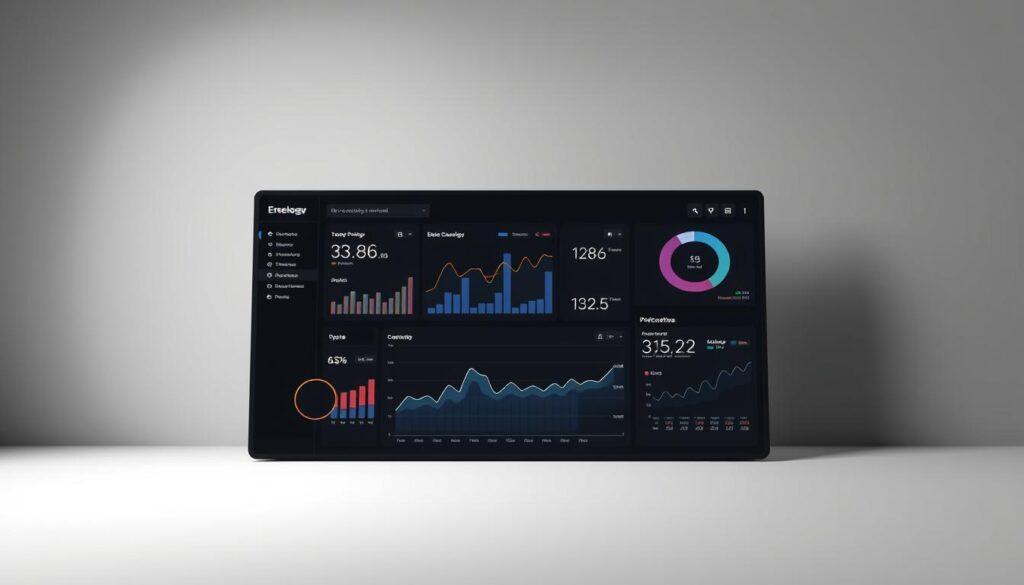
Live dashboards turn numbers into useful insights. They show you what’s happening now, not just last quarter. It’s like having a financial weather forecast that warns you of storms ahead.
Automated risk assessments are a big plus. They:
- Send smart questionnaires to risk owners
- Track responses without endless emails
- Calculate risk scores automatically
- Spot new risks before they grow
Good collaboration tools help your team work well together. They grow with your company, avoiding old computer problems.
Integration is also key. The best tools work smoothly with your current systems. They mix data from different sources into something useful.
Predictive analytics and AI are the highlights. They’re like a risk management crystal ball. These features spot trends humans might miss.
Good data analysis tools change the game. You go from reacting to planning ahead. Decisions are based on facts, not guesses. And you save time to think big, not just about spreadsheets.
It’s not just about having data. It’s about having the right data, in the right way, at the right time. That’s what makes some tools truly valuable, not just digital clutter.
Choosing the Right Tool for Analysis
Finding the perfect analytical tool is like swiping through a dating app. Every profile looks amazing, but some are not what they seem. Let me help you find the right tool for risk management.
The first date questions are the four pillars of tool evaluation:
- Ease of use – Because if your team won’t use it, you’ve bought expensive digital art
- Real ROI – Look beyond price tags to reduced losses and operational efficiency
- Actual functionality – Does it solve your problems or just look pretty?
- Integration capabilities – Shouldn’t require a PhD in software engineering

Now, let’s look at the contenders in this analytical talent show. AuditBoard solves the biggest risk management headache: scattered information. Companies report 49% deeper risk understanding – it’s like giving your organization risk management superhero vision.
Built by auditors who lived the struggle, it creates that mythical “single pane of risk” that shows how different risks play off each other. Think of it as the relationship counselor for your organizational risks.
MetricStream is the wise elder statesman of ERM tools, recently named a Leader in The Forrester Wave™. It offers a centralized risk repository that creates a common risk language across your organization.
Because nothing says chaos like everyone using different risk definitions. It’s the Webster’s Dictionary of risk management.
Diligent focuses on aligning leadership with the full risk spectrum, while ServiceNow simplifies complex risk assessments like a skilled bartender handles complicated drink orders.
OneTrust specializes in compliance and vendor risk management – critical in an era where data privacy regulations multiply fast. LogicGate brings the modern graph database approach, showing how risks, controls and business units connect in ways that would make a conspiracy theorist blush.
Your decision support process shouldn’t feel like gambling. It’s about matching your organization’s unique personality with tools that actually deliver on their promises. The right analytical tools don’t just report risks – they help you dance with them.
Remember: the flashiest tool isn’t always the best fit. Sometimes the quiet, reliable option that actually gets used is worth more than the shiny object that collects digital dust.
Recommendations for Sports Betting Operations
Welcome to the big leagues of sports betting operations. Here, your analytical tools are key, not just extras. Risk management is what sets pros apart from amateurs, faster than a Hail Mary pass in overtime.
The probability and impact matrix is your playbook. It helps you know which risks are most important. Will a star player’s injury hurt your operation? This matrix tells you before the injury report hits Twitter.
Risk quantification is next. “We might lose some money” isn’t enough when dealing with big liabilities. These tools turn vague worries into clear numbers, like a financial translator for your worst-case scenarios.
Scenario analysis tools are really interesting. They let you simulate every possible outcome, from weather disasters to referee controversies. It’s like having a time machine that shows you every alternate ending to the game before it even starts.
The real MVP? Financial risk management tools. They model market changes with precision, helping you navigate volatile betting landscapes like a seasoned captain steering through stormy seas.
But the true game-changer is real-time analytics and predictive capabilities. These systems analyze everything – player stats, weather patterns, even social media sentiment. They spot patterns human analysts would miss, giving you insights that feel almost psychic.
The best analytical tools work seamlessly with your systems and provide live dashboards. They update faster than a scoreboard. They’re not just software – they’re your strategic advantage in a world where information equals profit.
| Tool Type | Primary Function | Impact Level | Implementation Time |
|---|---|---|---|
| Probability Matrix | Risk prioritization | High | 2-4 weeks |
| Risk Quantification | Financial modeling | Critical | 4-6 weeks |
| Scenario Analysis | Outcome simulation | High | 3-5 weeks |
| Real-time Analytics | Live data processing | Game-changing | 6-8 weeks |
| Predictive Systems | Pattern recognition | Transformative | 8-12 weeks |
In sports betting operations, your data analysis capabilities are key. They determine if you’re making informed decisions or just guessing. The right tools don’t just improve your operation – they redefine what’s possible in this high-stakes game.
Training and Development of Analytical Skills
Your new analytical tools won’t do much without the right skills. It’s like buying a violin for someone who can’t play. The magic happens when your team learns to make data shine.
Change management is essential. You’re not just installing software; you’re upgrading minds. Good training turns spreadsheet experts into data wizards. People start to see the real value, not just corporate talk.
Data quality is critical. “Garbage in, garbage out” is more than a saying; it’s a warning. Your team needs to know how to check data quality and avoid getting lost in too much analysis.
It’s time to break down departmental walls. Risk doesn’t respect org charts. Teaching your team to work together helps everyone understand their role in the bigger picture.
Clear communication is key to good decision support. Reports should explain things, not confuse them. When your tools and people skills work together, risk management becomes effective.
The best results come from measuring success in real ways, not just numbers. When your team’s skills match your technology’s power, that’s when you start winning.